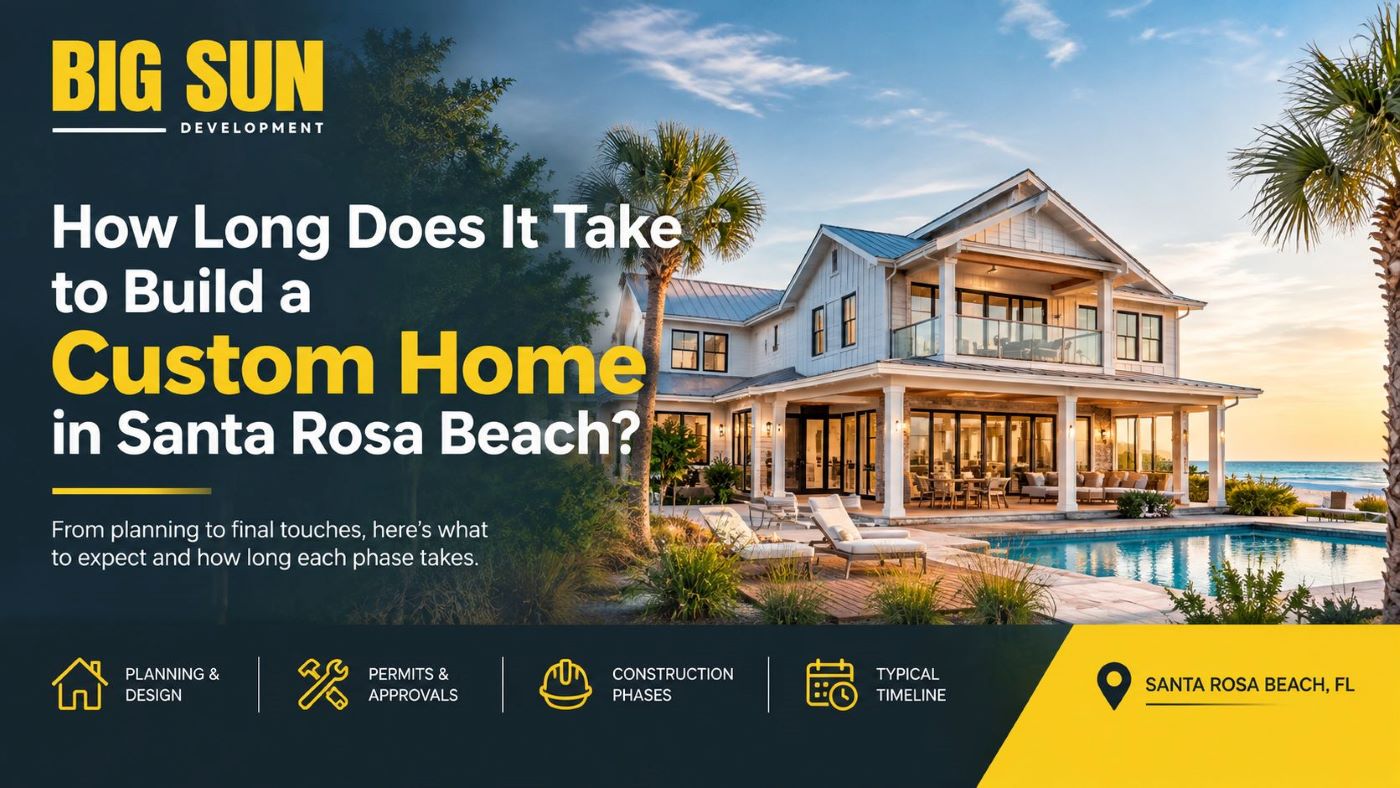
Building a custom home in Santa Rosa Beach is an exciting process, but it also requires patience and careful planning. One of the first questions homeowners usually ask is, “How long does it take to build a custom home?”
There is no single timeline that applies to every project. A relatively straightforward home on a well-prepared lot may move through construction faster than a highly customized coastal property with complex architectural features, extensive site work, or specialty materials.
As a general planning range, many Florida custom homes can take around 7 to 10 months from breaking ground to completion, while the complete process can extend to 9–14 months or longer when design, engineering, permitting, site preparation, and other pre-construction work are included. More complex Santa Rosa Beach projects can take considerably longer depending on their scope and site conditions.
Understanding what happens during each stage can help you create a more realistic expectation for your own project.
How Long Does a Custom Home Take to Build?
A custom home project is usually divided into several stages, and some of them overlap.
| Stage | General Planning Range |
| Initial planning and budgeting | 2–6 weeks |
| Design and engineering | 1–4+ months |
| Planning and permitting | Several weeks to several months |
| Site preparation | 2–6 weeks |
| Foundation | 2–6 weeks |
| Framing and structural work | 4–10 weeks |
| Mechanical systems | 3–8 weeks |
| Interior and exterior finishes | 2–4+ months |
| Final inspections and completion | 2–6 weeks |
These are broad planning ranges rather than guaranteed deadlines. The actual schedule depends on the property’s location, design, construction complexity, material availability, weather, inspections, and other project-specific factors.
For homeowners researching custom home building in Santa Rosa Beach, FL, understanding these stages before construction begins can make it easier to plan the project realistically.
What Happens Before Construction Begins?
The construction timeline doesn’t actually start when the foundation is poured.
A substantial amount of work can happen before the first day of physical construction.
Establishing the Budget
The first step is usually determining what you want to build and what you are comfortable investing.
Your construction budget may need to account for more than the house itself. Depending on the property and project, there can also be expenses associated with land, architectural and engineering services, surveys, permits, site preparation, utilities, landscaping, pools, outdoor living areas, and other improvements.
Establishing these expectations early can help prevent major changes once the design process is underway.
Designing the Home
Custom homes take time because the house is being designed around the homeowner rather than selected from a standard plan.
The design process may involve:
- Floor plans
- Exterior elevations
- Structural plans
- Electrical layouts
- Plumbing layouts
- HVAC planning
- Window and door selections
- Cabinet layouts
- Interior finishes
- Outdoor living areas
A simple design may progress relatively quickly, while a highly customized home with multiple levels, complex rooflines, large openings, specialty spaces, or extensive outdoor areas may require substantially more planning.
How Long Does Permitting Take in Santa Rosa Beach?
Permitting is an important part of the pre-construction timeline.
For properties within Walton County, single-family home applications go through Planning and Development Services for an initial review to determine compliance with applicable requirements before proceeding to the Building Department. County review can involve issues such as setbacks, stormwater management, natural-resource protection, parking, and floodplain requirements.
Walton County’s FAQ states that its initial planning review typically takes approximately 2–3 weeks, although the overall process continues through subsequent requirements, revisions, permitting, inspections, and final approval.
The important point is that permitting should be included in the project schedule rather than treated as an afterthought.
If plans require revisions or additional documentation, the process can take longer.
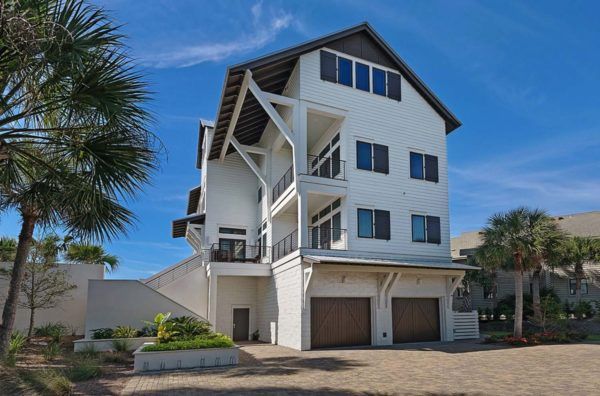
How Does the Property Affect the Construction Timeline?
The condition and location of the lot can have a major impact on the schedule.
Before construction begins, a property may require:
- Clearing
- Grading
- Drainage work
- Utility preparation
- Soil evaluation
- Surveying
- Foundation preparation
- Access improvements
- Flood-related planning
A straightforward lot may require relatively little preparation. Another property could require more extensive site work before the foundation can be started.
This is particularly important in coastal areas, where drainage, floodplain conditions, environmental considerations, and other site-specific factors can influence both design and construction.
Does Flood Zone Affect the Timeline?
It can.
Not every Santa Rosa Beach property has the same flood-related requirements, so the property’s specific location and flood designation need to be evaluated.
Walton County states that developments within special flood hazard areas require additional review and that buildings in those areas must meet applicable elevation and floodplain requirements. Depending on the flood zone, this can involve elevation documentation, specific foundation requirements, and additional certifications.
For example, Walton County requires elevation documentation at specific stages for buildings in areas of special flood hazard.
This is one reason a coastal custom home should be evaluated on its actual site rather than applying a generic construction timeline.
How Long Does the Foundation and Framing Take?
Once planning and site preparation are complete, the physical structure begins to take shape.
Foundation work can take several weeks depending on the foundation type, site conditions, engineering requirements, weather, and inspections.
Framing is another major milestone because it gives homeowners their first clear view of the home’s size and layout.
A relatively straightforward structure may move through framing faster than a custom home with:
- Multiple stories
- Complex rooflines
- Large window openings
- Extensive outdoor areas
- Unique structural features
- Specialty architectural details
Once the structure is framed, several trades can begin working through the home.
What Happens After Framing?
The next phase typically involves installing the home’s major systems and beginning the finishing work.
This may include:
- Plumbing
- Electrical
- HVAC
- Roofing
- Windows and doors
- Insulation
- Drywall
- Flooring
- Cabinets
- Countertops
- Tile
- Painting
- Lighting
- Interior doors
- Trim and millwork
- Fixtures
- Exterior finishes
Some of these activities happen in sequence, while others overlap.
This is also the stage where material lead times can become particularly important.
Can Material Choices Delay a Custom Home?
Yes.
Custom homes often involve a large number of individual selections. Cabinets, windows, doors, appliances, tile, lighting, countertops, plumbing fixtures, and specialty materials may all have different manufacturing and delivery schedules.
If an important item arrives late, it can affect other trades that depend on it.
For example, delayed cabinetry can affect countertop templating and installation. A delayed window package can affect exterior work and interior finishing.
For this reason, homeowners should make important selections as early as practical.
Does Weather Affect Construction in Santa Rosa Beach?
Weather can influence construction schedules, especially during outdoor phases.
Heavy rain, high winds, tropical weather, and other conditions can affect:
- Excavation
- Concrete work
- Framing
- Roofing
- Exterior finishes
- Painting
- Landscaping
- Site grading
Not every weather delay can be predicted in advance.
A realistic construction schedule therefore needs some flexibility rather than assuming that every planned workday will proceed without interruption.
Does a Larger House Always Take Longer?
Size matters, but it isn’t the only factor.
A larger house generally requires more materials, labor, systems, and finishing work. However, architectural complexity can have an equally important impact.
For example, a 3,000-square-foot home with a straightforward design may be easier to build than a smaller house featuring multiple rooflines, complicated structural transitions, custom millwork, specialty finishes, and extensive outdoor living spaces.
The level of customization should therefore be considered alongside square footage when estimating the timeline.
What Can Homeowners Do to Keep Construction Moving?
Homeowners can influence the schedule more than they may realize.
One of the most important things is making decisions on time.
A few practical steps can help:
- Finalize Major Selections Early: Choose important materials and fixtures before the construction phase in which they are needed.
- Limit Mid-Construction Changes: Changing the design after work has begun can require additional labor, materials, and coordination.
- Maintain Clear Communication: Questions, approvals, and changes should be communicated clearly so the builder and other professionals can act on them.
- Plan for Long-Lead Materials: Identify products that may require extended manufacturing or shipping times.
- Keep Some Flexibility: Even a well-organized project can experience weather, inspection, material, or site-related delays.
What If You Want to Add a Second Story?
Some homeowners may consider building upward rather than expanding the footprint.
Adding a floor or second story to an existing home requires its own structural evaluation. The existing foundation, framing, roof structure, stairs, mechanical systems, and other components may need to be assessed before determining whether the project is feasible.
This is different from constructing a new custom home, but it illustrates why construction timelines should be based on the actual property and scope rather than a generic estimate.
How Can You Get a More Accurate Construction Timeline?
The most useful construction timeline is created specifically for your project.
Before establishing a target completion date, consider:
- Lot conditions
- Home size
- Architectural complexity
- Design completion
- Permitting requirements
- Site preparation
- Floodplain considerations
- Material selections
- Custom features
- Labor availability
- Weather
- Inspection requirements
A builder should be able to break the project into major phases so you can see how one stage connects to the next.
For homeowners planning a custom home in Santa Rosa Beach, this project-specific approach provides a much more useful expectation than simply being told that a home will take “about a year.”
Final Thoughts
So, how long does it take to build a custom home in Santa Rosa Beach? A typical Florida custom home may take around 7–10 months from breaking ground, while the complete process from early planning through completion can commonly extend beyond that. More complex coastal projects may require considerably more time depending on design, permitting, site conditions, weather, materials, and other factors.
The most important thing is to understand that a custom-home timeline isn’t simply a countdown from the day construction starts. Design decisions, site evaluation, county review, permitting, material selections, inspections, and construction all contribute to the final schedule.
Planning these stages carefully can help reduce avoidable delays while giving you a clearer idea of what to expect throughout the project. If you’re planning a custom home in Santa Rosa Beach, Big Sun Development can help you understand the different stages of construction and the factors that may influence your project’s timeline.