
When a home no longer fits your lifestyle, you generally have two choices: improve the space you already have or create additional space.
For Santa Rosa Beach homeowners, that decision can be more complicated than simply choosing between a renovation and an addition. An older beach home may have an outdated kitchen or bathroom, while a growing family may need another bedroom, larger living area, or an additional floor. A vacation property may need both functional improvements and additional space for guests.
Understanding the difference between a home addition and a home renovation can help you determine which approach makes the most sense for your property, budget, and long-term plans.
What Is the Difference Between a Home Addition and a Renovation?
A home renovation generally improves or changes the existing space without substantially increasing the home’s footprint.
Examples include:
- Remodeling a kitchen
- Updating bathrooms
- Reconfiguring an existing floor plan
- Replacing flooring
- Updating electrical or plumbing systems
- Improving lighting
- Replacing cabinets and countertops
- Modernizing an older interior
A home addition, on the other hand, creates new usable space by expanding the existing structure.
An addition might involve:
- Building a new bedroom
- Expanding a living room
- Adding a guest suite
- Extending the kitchen
- Building a new garage
- Adding a second story
- Adding another floor or level
- Expanding outdoor living areas
For homeowners considering home remodeling in Santa Rosa Beach, the right choice depends largely on whether the existing footprint can realistically provide the space and functionality you need.
When Does a Home Renovation Make More Sense?
A renovation can be a better option when the home’s existing size is sufficient but the layout, finishes, or systems no longer meet your needs.
For example, imagine you have a three-bedroom home with enough overall space but a small, closed-off kitchen. You may not need to add square footage at all. A redesigned kitchen, improved storage, better lighting, and an open connection to the living area could solve the problem.
Renovation may be appropriate when:
- You need better functionality rather than more space
- The existing floor plan can be adapted
- The home’s structure is generally sound
- You want to modernize an older property
- You want to improve a kitchen or bathroom
- You want to update finishes and materials
- You want to improve energy efficiency
- You want to prepare a vacation home for more frequent use
In these situations, expanding the home may add unnecessary complexity.
When Should You Consider a Home Addition?
An addition becomes more attractive when the existing house simply doesn’t have enough space.
For example, you may need an additional bedroom, larger living area, home office, guest suite, or entertainment space. If there is no practical way to create that space within the existing footprint, expanding the structure may be the better solution.
Common reasons for considering an addition include:
- A growing family
- Additional bedrooms
- A larger primary suite
- More guest accommodations
- A home office
- More storage
- Larger entertainment areas
- Additional living space
- Accommodating multigenerational living
- Creating more space in a vacation home
An addition can allow you to remain in a home and neighborhood you already enjoy rather than moving to a different property.
What Does “Adding a Floor” or “Adding a Story” Involve?
One type of addition that deserves special consideration is building upward.
Instead of extending the home outward, a homeowner may decide to add a floor, add a level, or add a story to an existing house.
This can be particularly useful when the lot has limited room for horizontal expansion.
However, adding another level isn’t simply a matter of building walls on top of the existing structure. The home’s foundation, framing, structural system, roof, stairs, electrical system, plumbing, HVAC, and other components may all need to be evaluated.
A structural professional may need to determine whether the existing home can support the additional load.
The feasibility of adding another story should therefore be determined before finalizing architectural plans or construction budgets.
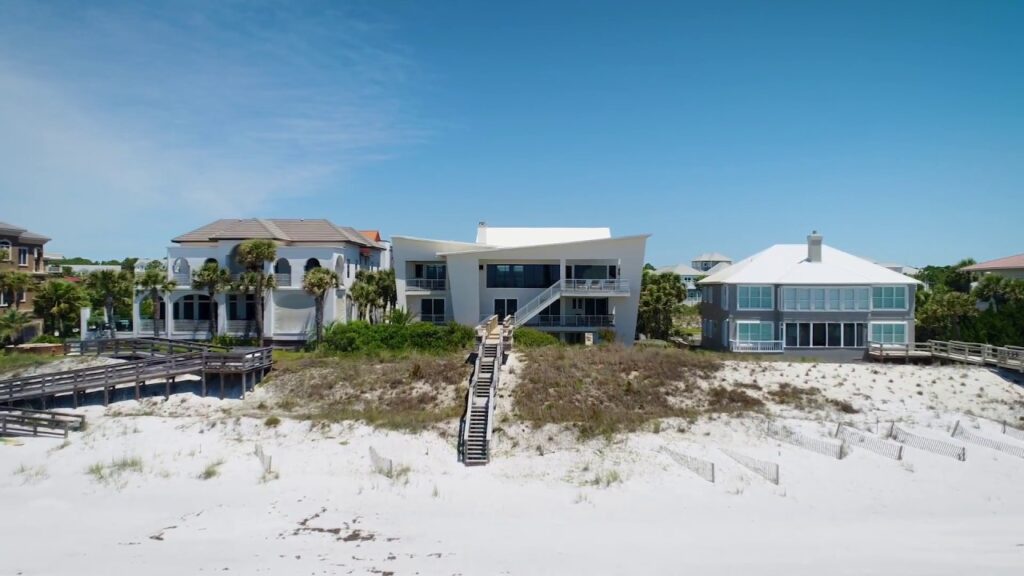
How Does the Property Lot Affect Your Decision?
Your property itself can help determine whether an addition is practical.
A homeowner considering a ground-level expansion may need to evaluate:
- Available yard space
- Setbacks
- Lot coverage
- Drainage
- Existing utilities
- Trees and landscaping
- Flood-zone requirements
- Easements
- Access for construction
In coastal areas, site conditions can introduce additional considerations.
Walton County’s planning process evaluates factors such as site layout, setbacks, stormwater management, floodplain requirements, and other development standards.
This means that having physical space on a lot doesn’t necessarily mean every type of addition will be permitted.
Could an Addition Be Better Than Moving?
Sometimes homeowners consider moving simply because they need more space.
But moving also comes with significant costs and practical considerations. You may have to sell your current property, purchase another home, pay transaction costs, move, and potentially renovate the new property anyway.
If you already like your home’s location, an addition may offer another path.
For example, a family might add a bedroom and bathroom instead of purchasing a larger home. A vacation homeowner might expand the living area and add another guest suite instead of looking for a different property.
The right decision depends on the property’s potential and the cost of achieving your desired result.
What About an Older Home?
Older homes require additional consideration before either a major renovation or addition.
A home may have outdated electrical wiring, aging plumbing, previous structural modifications, moisture damage, or construction methods that differ from today’s standards.
Before combining a major renovation with an addition, evaluate the condition of the existing structure.
Ask:
- Is the foundation in good condition?
- Can the existing electrical system support the planned improvements?
- Are the plumbing systems adequate?
- Is there evidence of moisture intrusion?
- Does the roof need replacement?
- Can the existing structure accommodate the planned addition?
- Are previous additions properly integrated?
These questions can help determine whether the property is a good candidate for expansion.
Which Option Usually Costs More?
There is no universal answer because the cost depends on the scope.
A basic renovation may cost substantially less than constructing new square footage. However, a high-end whole-home renovation involving structural changes, premium materials, new plumbing, electrical upgrades, and extensive custom work can become a major investment.
An addition generally introduces additional construction components, such as:
- Foundation work
- Exterior walls
- Roofing
- Windows and doors
- Insulation
- Electrical
- Plumbing
- HVAC
- Flooring
- Interior finishes
If the addition connects to an existing room, the transition between old and new construction also needs to be carefully planned.
The best comparison is therefore not simply “addition versus renovation.” It is the cost of each option relative to the result you actually need.
Can You Combine a Home Addition With a Renovation?
Yes, and in some cases this may be the most logical approach.
For example, a homeowner may add a new bedroom and bathroom while renovating the existing hallway and living area.
Another project might involve extending the kitchen footprint while completely remodeling the original kitchen.
Combining the projects can allow the new and existing spaces to feel like one cohesive home rather than two separate construction phases.
However, combining projects also increases the overall scope. A clear plan is important so that structural, plumbing, electrical, design, and finish decisions are coordinated from the beginning.
How Do Additions Affect Coastal Homes?
Santa Rosa Beach properties require particular attention to local environmental and building considerations.
For properties within applicable flood-hazard areas, Walton County identifies specific requirements for new construction and additions, including elevation documentation and other floodplain-related requirements.
Walton County also notes that construction and alteration projects requiring Building Department inspection generally require permits, with specific rules and exemptions depending on the project and property.
This is important when planning an addition because the project may affect more than the home’s interior.
A professional should evaluate the property and proposed scope before construction begins.
What Should You Consider Before Choosing?
Before deciding between a renovation and an addition, answer a few basic questions.
1. Do You Need More Space?
If the answer is no, a renovation may be enough.
2. Can the Existing Layout Be Improved?
If your problems can be solved by rearranging rooms, updating finishes, or improving storage, expansion may not be necessary.
3. Is There Room to Expand?
Evaluate both the lot and the home’s existing structure.
4. Could You Build Up Instead of Out?
If the lot has limited expansion potential, adding a level or second story may be worth investigating.
5. What Is the Long-Term Goal?
Think about how you expect to use the property five or ten years from now.
6. What Does the Budget Allow?
Establish a realistic project budget before becoming committed to a particular design.
How Should You Start Planning the Project?
Start with the problem rather than the construction method.
Instead of saying, “I want an addition,” identify what you are trying to accomplish.
Maybe you need another bedroom.
Maybe your kitchen is too small.
Maybe you want a larger living area for entertaining.
Maybe your vacation home needs additional guest accommodations.
Once the goal is clear, evaluate whether the solution requires renovation, an addition, adding a floor, or a combination of approaches.
For homeowners researching home additions and remodeling in Santa Rosa Beach, discussing the existing structure and desired outcome with an experienced construction professional can help determine which approach is practical.
Final Thoughts
A home addition and a home renovation solve different problems. Renovation is generally about improving the space you already have, while an addition creates new usable space when the existing footprint isn’t enough.
For some homeowners, a kitchen or bathroom remodel may completely solve the problem. For others, adding a bedroom, expanding the living area, or adding a floor to an existing home may provide the functionality they need.
The most important step is to evaluate the property before deciding on the construction approach. Consider the existing structure, available lot space, local requirements, budget, and how you expect to use the home in the future.
For homeowners considering a renovation, addition, or larger residential improvement in Santa Rosa Beach, Big Sun Development can help evaluate the project scope and develop a practical construction approach around the property’s existing conditions and the homeowner’s goals.