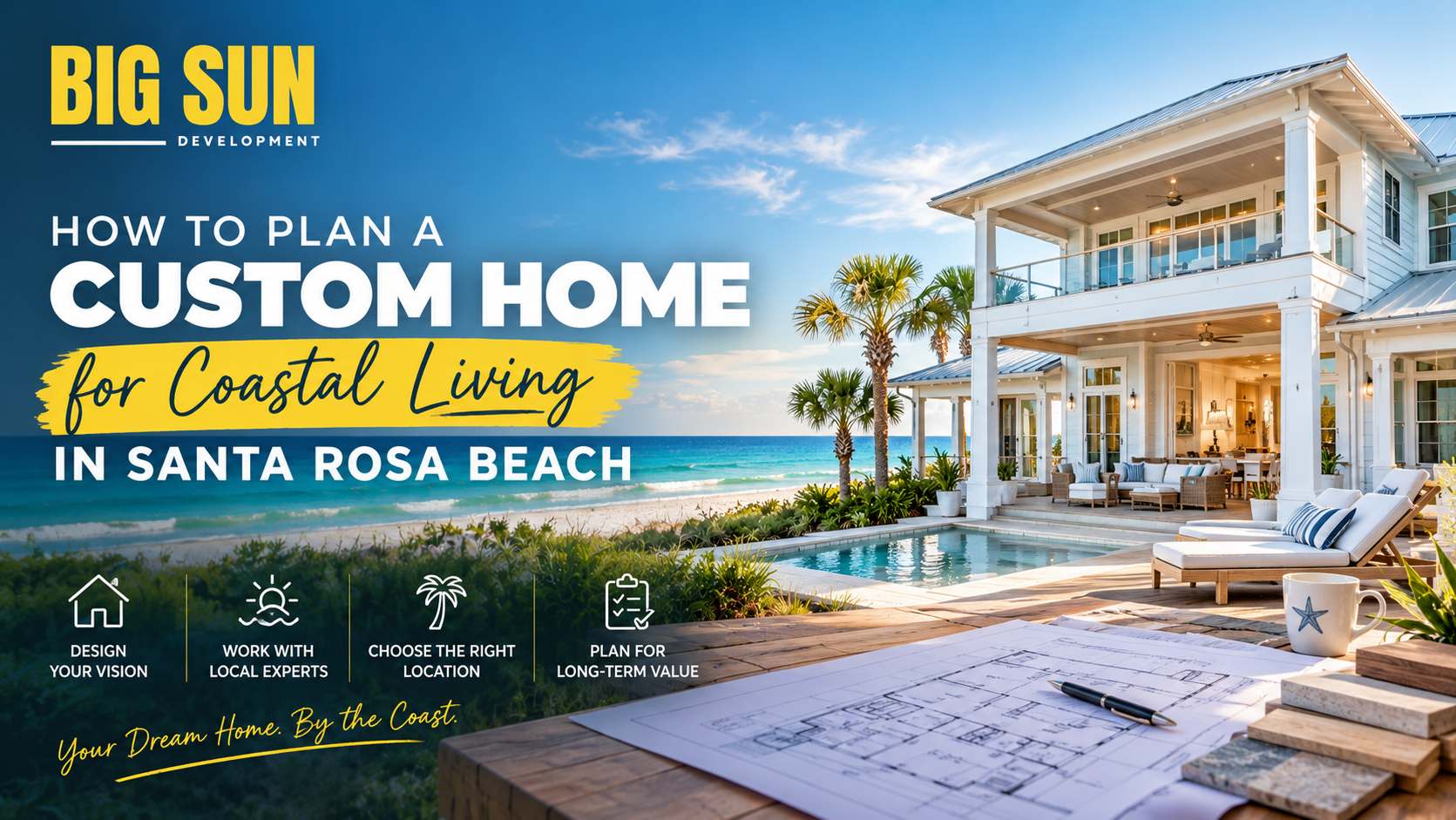
Building a custom home in Santa Rosa Beach is about much more than choosing a beautiful floor plan. Coastal living comes with a unique combination of sunlight, humidity, salt air, wind, storms, outdoor living, and flood considerations. A home that looks great on paper also needs to perform well in the environment around it.
That is why coastal home planning should begin before selecting finishes, cabinets, or paint colors. The lot, home orientation, structural design, materials, drainage, windows, outdoor spaces, and long-term maintenance all need to work together.
If you are planning a new home in Santa Rosa Beach, here are the most important things to consider when creating a home that is comfortable, durable, functional, and designed specifically for coastal living.
Start With the Property Before the Floor Plan
One of the biggest mistakes homeowners can make is choosing a floor plan before fully understanding the property.
Every lot has its own characteristics. The size and shape of the property, existing vegetation, access, elevation, drainage, setbacks, surrounding homes, views, and environmental considerations can all influence how the home should be positioned.
In Santa Rosa Beach, flood risk and site conditions can also affect the way a home is designed and elevated. Walton County has specific requirements for construction in flood hazard areas, so these factors should be evaluated early rather than after the design has already been completed.
This is where working with an experienced Custom Home Builder in Santa Rosa Beach, FL can make the planning process much easier. The goal is to design the home around the property instead of forcing a standard design onto the lot.
Design Around the Coastal Environment
A coastal home needs to respond to its surroundings.
Santa Rosa Beach homeowners deal with conditions that are different from those in many inland markets. Humidity, moisture, intense sunlight, salt exposure, high winds, and tropical weather should all influence the design and material selections.
When planning the home, consider: Jo in
- How the home will be positioned in relation to the sun
- Which rooms should receive morning or afternoon light
- Where outdoor living areas should be located
- How wind exposure affects outdoor spaces
- How rainwater will move across the property
- Which exterior materials will perform well in a coastal environment
- How easily exterior surfaces can be cleaned and maintained
The best coastal homes do not simply look like beach houses. They are designed to function in the coastal environment.
Pay Close Attention to Elevation and Drainage
Water management should be one of the earliest conversations during the planning process.
A beautiful home can still experience serious problems if the property does not handle rainfall and runoff properly. Site grading, drainage, elevation, stormwater management, and the location of driveways and outdoor structures should all be considered during the design phase.
For properties in special flood hazard areas, Walton County requires additional review and specific elevation-related requirements.
Before finalizing the home design, I would recommend making sure you understand:
| Planning Area | What to Consider |
| Flood zone | Determine whether the property is located in a flood hazard area |
| Elevation | Understand applicable elevation requirements before finalizing the design |
| Drainage | Plan how rainwater will move away from the home |
| Foundation | Choose a foundation system appropriate for the site and conditions |
| Site grading | Make sure grading supports proper water management |
| Stormwater | Account for runoff and applicable local requirements |
These decisions can affect the structure, foundation, landscaping, driveway, garage, outdoor areas, and overall project budget.
Choose Materials That Can Handle Coastal Conditions
Material selection is one of the most important parts of coastal home planning.
Salt air, humidity, moisture, sunlight, and wind can be hard on exterior materials. Choosing products simply because they look attractive may result in higher maintenance later.
For example, homeowners should think carefully about:
- Exterior siding and cladding
- Roofing materials
- Exterior doors
- Windows and glazing
- Fasteners and hardware
- Decking materials
- Exterior paint and finishes
- Outdoor lighting
- Railings and other exposed metal components
The goal is not to eliminate maintenance completely. No coastal home is maintenance-free. Instead, the goal is to select materials that are appropriate for the environment and make long-term ownership easier.
Create a Strong Connection Between Indoor and Outdoor Living
One of the biggest advantages of building a custom home in Santa Rosa Beach is the opportunity to design the house around the coastal lifestyle.
Outdoor living should not be treated as an afterthought.
Think about how your family will actually use the property. Depending on the lot and design, you might want to incorporate:
- Covered patios
- Outdoor kitchens
- Pool areas
- Screened porches
- Large sliding doors
- Outdoor dining areas
- Comfortable seating zones
- Rinsing areas for sandy feet and beach equipment
- Dedicated storage for outdoor gear
Large openings between the living room, kitchen, and outdoor spaces can create a more connected floor plan while making the home feel larger.
At the same time, outdoor spaces should be positioned carefully so they remain comfortable and functional throughout the year.
Maximize Natural Light Without Ignoring Energy Efficiency
Coastal homes often benefit from abundant natural light, but more glass is not automatically better.
Window placement should be planned around the home’s orientation, privacy, views, solar exposure, and energy performance.
Instead of placing large windows everywhere, consider where natural light provides the most value.
For example, large windows may work particularly well in living areas where views are important, while bedrooms may benefit from more controlled exposure.
Shading is another important consideration. Covered porches, roof overhangs, appropriately positioned windows, and other architectural features can help control direct sunlight while maintaining the bright, open feeling many homeowners want.
Plan the Kitchen and Living Areas for the Way You Actually Live
A coastal custom home should reflect your lifestyle rather than simply follow a popular design trend.
If you regularly entertain guests, the kitchen may need more preparation space, seating, storage, and connection to outdoor areas.
If the home will be used as a second home or vacation property, durability and easy maintenance may become bigger priorities.
If the property will eventually serve as a full-time residence, you may want more dedicated storage, office space, laundry functionality, and flexible living areas.
The key is to think beyond the initial move-in experience.
Ask yourself:
How will this home work five or ten years from now?
That question can change everything from the number of bedrooms to the location of storage rooms and the size of the kitchen.
Think About Bedrooms, Guests, and Vacation Use
Santa Rosa Beach homes may serve different purposes over their lifetime. Some are primary residences, while others are second homes, vacation properties, or homes that accommodate extended family and guests.
That makes flexibility especially valuable.
Consider whether you need:
- A private guest suite
- Additional bathrooms
- Flexible rooms that can change functions
- A dedicated office
- Bunk or guest spaces
- Separate areas for children
- Extra linen and household storage
A well-planned home can accommodate guests without making the entire house feel like a guest house.
Don’t Forget Storage and Maintenance
Storage is one of those details that often gets overlooked during the exciting parts of home design.
But coastal living can require plenty of equipment and supplies.
Think about where you will store:
- Beach chairs
- Bicycles
- Paddleboards
- Outdoor cushions
- Pool equipment
- Landscaping tools
- Cleaning supplies
- Seasonal items
- Luggage
- Sports equipment
A mudroom, oversized pantry, garage storage system, under-stair storage, or dedicated outdoor storage area can make a significant difference.
The same applies to maintenance access. Mechanical systems, exterior equipment, drainage components, and other areas that require regular servicing should be accessible without creating unnecessary disruption to the home.
Build the Budget Around Coastal Construction From the Beginning
Coastal design decisions can affect the overall construction budget.
It is better to understand those costs during planning than to discover them after construction has started.
Your budget should account for more than the basic cost of the house. Consider the potential cost of:
- Site preparation
- Engineering and design
- Foundation requirements
- Elevation requirements
- Drainage and stormwater solutions
- Impact-resistant or appropriately rated windows and doors
- Roofing and exterior materials
- Outdoor living spaces
- Landscaping
- Pool construction
- Driveways and walkways
- Long-term maintenance
A good custom home budget should leave room for the details that make the home appropriate for its location.
Plan the Home for Long-Term Coastal Living
A custom home should not only look good when construction is complete. It should continue to perform well as the years pass.
This means thinking about durability, maintenance, accessibility, energy efficiency, storage, future lifestyle changes, and potential resale value.
It also means avoiding design decisions that are based entirely on short-term trends.
Coastal architecture can be timeless without being generic. You can create a home that feels modern and personal while still using practical materials, functional spaces, and design choices that make sense for Santa Rosa Beach.
For homeowners considering custom home construction in Santa Rosa Beach, the planning stage is the opportunity to bring all of these considerations together before construction begins.
Work With a Builder Who Understands the Planning Process
Building near the coast requires more than selecting an attractive floor plan.
The property, structural requirements, drainage, materials, indoor-outdoor connection, lifestyle, maintenance, and budget all need to be considered as part of one complete plan.
Starting with these questions can help you avoid expensive changes later and create a home that feels right for the way you want to live in Santa Rosa Beach.
A well-planned coastal home should give you the beauty and lifestyle you want while also being designed for the environment around it. If you are ready to start planning your project, Big Sun Development can help you move from the initial concept toward a thoughtfully planned custom home in Santa Rosa Beach.