
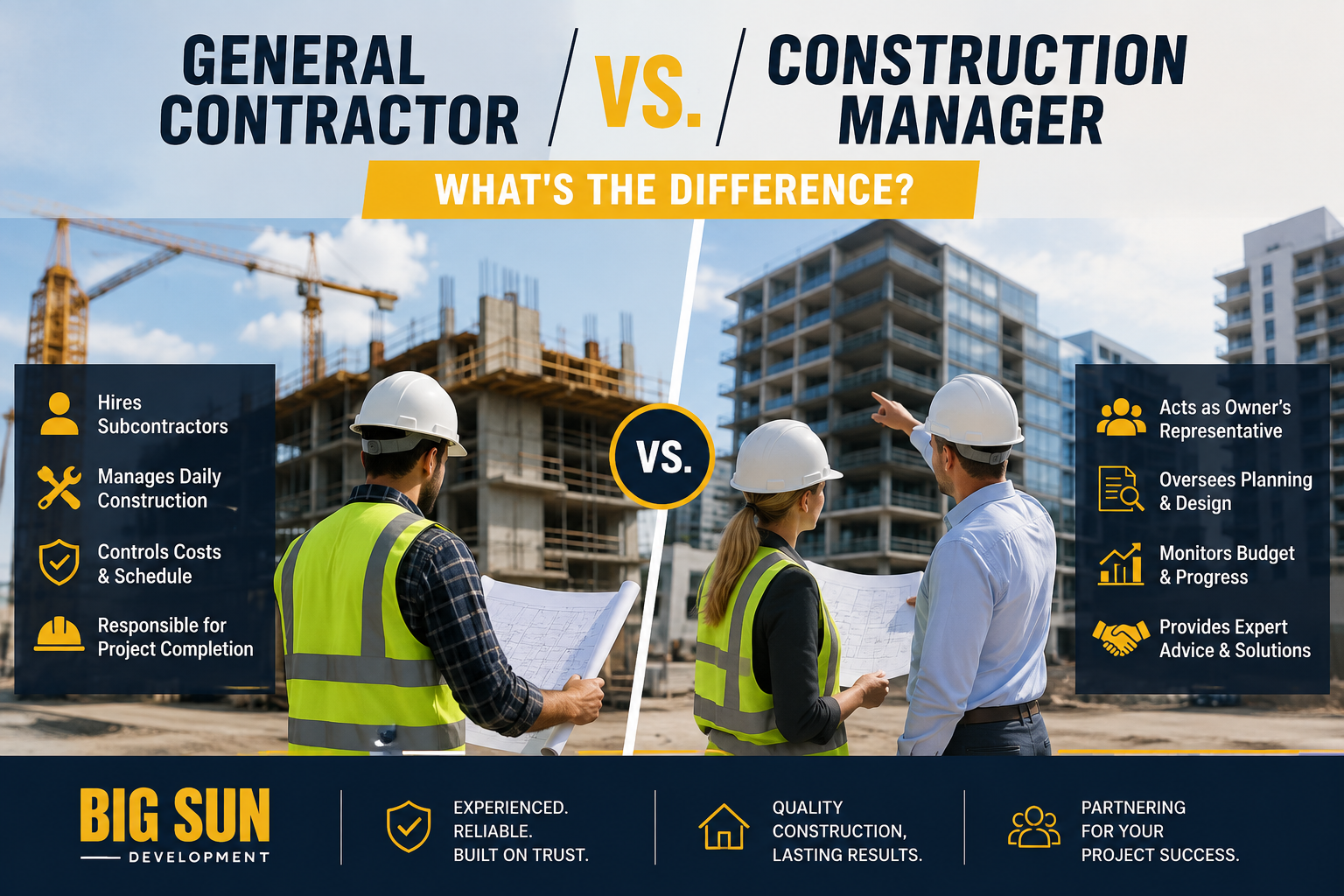
When planning a home construction, renovation, addition, or larger development project, you may encounter two terms that sound similar: general contractor and construction manager. While both can help coordinate construction, their responsibilities, contractual relationships, and involvement in a project can differ.
Understanding the distinction can help homeowners make a more informed decision about who they need before construction begins.
What Is a General Contractor?
A general contractor is typically responsible for executing the construction work outlined in a project contract. This can include coordinating subcontractors, scheduling work, arranging materials, overseeing job-site activities, and managing construction through completion.
For homeowners planning a project, working with an experienced General Contractor in Santa Rosa Beach can provide one central point of coordination for the construction process.
A general contractor may work with electricians, plumbers, framers, roofers, HVAC professionals, finish contractors, and other trades. Instead of the homeowner having to coordinate each trade independently, the GC generally manages these relationships as part of the construction process.
What Does a Construction Manager Do?
A construction manager focuses heavily on planning, coordination, scheduling, cost control, communication, and overall project oversight. Depending on the contract structure, a construction manager may work directly for the property owner as an advisor or representative.
Construction management can begin earlier in the project than traditional general contracting. A construction manager may provide input during design development, budgeting, scheduling, and pre-construction planning.
The exact responsibilities depend on the agreement. Some construction managers may have broad authority over project coordination, while others primarily provide advisory and management services.
General Contractor vs. Construction Manager at a Glance
| Responsibility | General Contractor | Construction Manager |
| Construction execution | Typically central responsibility | Depends on contract structure |
| Subcontractor coordination | Common responsibility | May coordinate or oversee |
| Material procurement | Common responsibility | May assist with procurement |
| Project planning | Yes | Yes |
| Scheduling | Yes | Yes |
| Budget oversight | Yes | Often a major responsibility |
| Owner representation | Works directly with owner | Often represents or advises owner |
| On-site coordination | Typically extensive | Depends on role |
| Contract structure | Often contracts for construction work | Can work under several delivery models |
The table is a general comparison. Construction contracts can be structured differently, so the responsibilities of a particular GC or construction manager should always be confirmed before signing an agreement.
When Should You Hire a General Contractor?
A general contractor can be a strong choice when you want one company to take responsibility for coordinating the actual construction process.
This can be particularly useful for:
- New custom home construction
- Major home renovations
- Kitchen or bathroom remodels
- Home additions
- Second-story expansions
- Vacation home construction
- Rental property construction
- Commercial construction
For example, if you’re building a custom home in Santa Rosa Beach, you may not want to independently schedule the framing crew, electrician, plumber, roofer, drywall contractor, and other trades. A GC can coordinate those activities according to the construction schedule.
When Does Construction Management Make More Sense?
Construction management may be useful when an owner wants a dedicated professional focused on project planning, coordination, scheduling, cost management, and communication.
This approach can be particularly valuable for projects with multiple stakeholders, complex planning requirements, or an owner who wants significant involvement in selecting and coordinating different project participants.
Construction managers can become involved during the early stages of a project, helping owners evaluate schedules, budgets, design decisions, and construction requirements before work begins.
However, the exact role depends heavily on the contract. Some construction management arrangements involve the manager acting primarily as the owner’s representative, while other delivery models give the construction manager broader responsibility.
What Is the Biggest Difference Between a GC and a Construction Manager?
The simplest way to understand the distinction is to consider who is responsible for executing and contracting the construction work.
A general contractor is generally hired to carry out the construction scope. The GC typically coordinates subcontractors, materials, labor, schedules, and day-to-day construction activities.
A construction manager may instead serve as an owner’s representative or project management professional, depending on the delivery method. Their role can place greater emphasis on planning, coordination, cost control, and oversight.
There can be overlap between the two roles, which is why the actual contract matters more than the title alone.
How Do Contracts and Responsibilities Differ?
Before choosing a construction professional, review exactly what the agreement covers.
Important questions include:
- Who hires and pays subcontractors?
- Who purchases construction materials?
- Who is responsible for scheduling?
- Who manages inspections?
- Who handles change orders?
- Who communicates with the architect?
- Who tracks the project budget?
- Who is responsible for site supervision?
- Who carries responsibility for construction performance?
- Who should you contact when a problem occurs?
These details can vary from one project to another. Two companies may use the same title while offering substantially different services.
Which Option Is Better for a Custom Home?
For a homeowner building a custom home, the right choice depends on the project’s size, complexity, delivery structure, and how much management the owner wants to handle personally.
A general contractor may be appropriate when you want a construction professional to coordinate the trades and manage the physical building process.
A construction manager may be helpful when you need broader project coordination, especially during planning and pre-construction.
In some projects, the roles may overlap or exist within the same organization. The important thing is to understand who is responsible for each part of the project before construction begins.
What About Home Additions and Remodeling?
The distinction also matters for remodeling and additions.
A relatively straightforward bathroom remodel may require less coordination than a whole-home renovation or a project involving a new floor or second story.
For larger projects, coordination becomes increasingly important. Adding a level or story to an existing house, for example, can involve architects, engineers, permitting professionals, structural specialists, and multiple construction trades.
A clear management structure helps ensure everyone understands their responsibilities and the sequence of work.
Questions to Ask Before Hiring Either Professional
Before signing a construction agreement, ask the prospective professional to explain their role in straightforward terms.
Consider asking:
- What services are included in your contract?
- Who manages the subcontractors?
- Who is responsible for purchasing materials?
- How are schedule changes communicated?
- How are change orders handled?
- Will you coordinate with my architect or designer?
- Who handles permits and inspections?
- How will project costs be tracked?
- Who will be my primary point of contact?
- Can you provide examples of similar projects?
The answers can help you determine whether the company’s role matches your expectations.
Choosing the Right Construction Partner in Santa Rosa Beach
Santa Rosa Beach projects can range from custom coastal homes and vacation properties to major renovations, additions, and commercial construction. The right construction professional should have experience that matches your project’s scope and complexity.
Look for a licensed and insured professional, relevant project experience, clear communication, and a contract that clearly defines responsibilities. Local experience can also be valuable when a project involves coastal conditions, local permitting requirements, architects, or specialized construction needs.
Final Thoughts
A general contractor and construction manager can both play important roles in a successful construction project, but they are not necessarily interchangeable. A general contractor typically focuses on executing and coordinating construction. In contrast, construction management can place greater emphasis on planning, oversight, coordination, and representing the owner’s interests, depending on the project delivery method.
The best choice ultimately depends on your project’s size, complexity, contract structure, budget, and preferred level of involvement.
If you’re planning a custom home, renovation, addition, or other construction project in Santa Rosa Beach or the surrounding 30A area, Big Sun Development LLC can help you understand the construction process and determine the right approach for your project.