Building a home along Florida’s Gulf Coast offers beautiful views, beach access, and a relaxed coastal lifestyle. However, coastal living also comes with environmental challenges, including hurricanes, strong winds, storm surge, heavy rainfall, and saltwater exposure.
For homeowners in Santa Rosa Beach and along 30A, designing a hurricane-resilient coastal home means looking beyond architectural appearance. The home’s foundation, roof, structural connections, windows, and exterior materials all influence how well it performs during severe weather.
Although no home can be completely hurricane-proof, thoughtful planning and construction can help reduce damage, improve durability, and make storm recovery easier.
Understanding which features matter most can help homeowners make better decisions before construction begins.
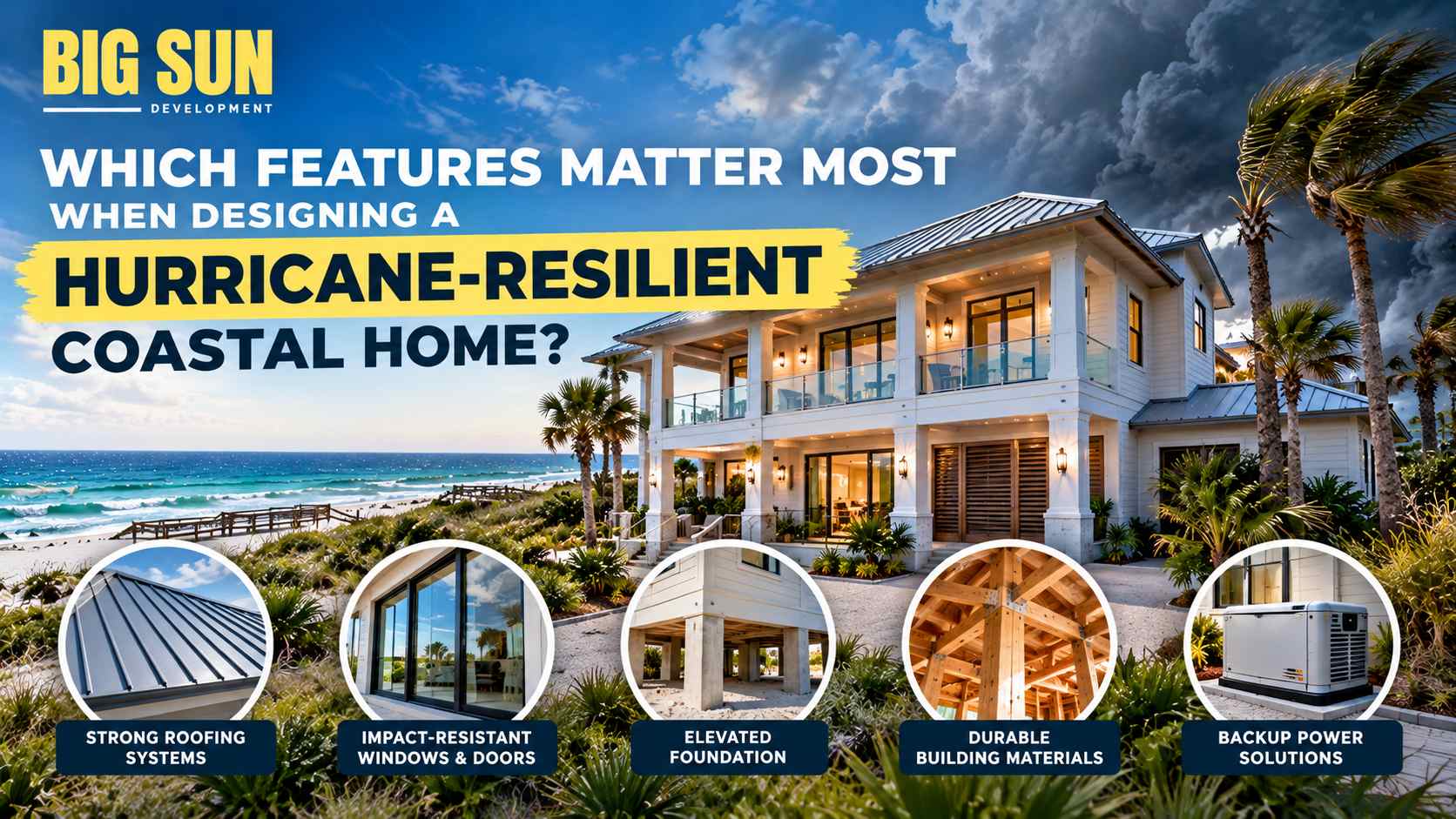
1. Elevated Foundations and Proper Flood Protection
One of the most important features of a hurricane-resilient coastal home is a foundation designed for the property’s specific flood and soil conditions.
Coastal properties may face storm surge, flooding, erosion, and wave action during hurricanes. Elevating the living space can help reduce exposure to floodwater, but the appropriate foundation system depends on the property’s location and engineering requirements.
When planning a new home, working with an experienced beach home builder in Santa Rosa Beach can help homeowners evaluate coastal construction considerations early in the design process.
Important Foundation Features
- Elevated living areas: Positioning occupied floors above the required design flood elevation helps reduce flood exposure.
- Engineered pilings or columns: In certain coastal flood zones, open foundations help accommodate water movement beneath the home.
- Proper anchoring: Foundation connections must resist wind uplift and lateral forces.
- Erosion considerations: Foundation design should account for soil conditions and potential scour during severe storms.
- Flood-compatible lower levels: Areas beneath elevated homes may require flood-resistant materials, flood openings, or breakaway walls, depending on the applicable flood zone.
In Walton County, elevation and foundation requirements vary by flood zone. Homeowners should confirm the property’s flood designation and applicable construction requirements before finalizing their plans.
2. A Strong Roof Designed for High Winds
The roof is one of the most vulnerable parts of a coastal home during a hurricane.
High winds create pressure and uplift forces that can damage roofing materials, loosen structural connections, and allow water to enter the building.
A hurricane-resilient roof should be designed as an integrated system rather than simply covered with durable roofing materials.
Features Worth Prioritizing
- Roof shape: Hip roofs often perform well in high-wind conditions because they have fewer large vertical end walls exposed to wind pressure. However, proper engineering and connections remain essential regardless of roof style.
- Roof-to-wall connections: Engineered connectors, including hurricane straps or clips where specified, help secure roof framing to the supporting walls.
- Roof deck attachment: Properly installed roof sheathing and fasteners help resist wind uplift.
- Sealed roof deck: A secondary water barrier can reduce water intrusion if the primary roof covering is damaged.
- Wind-rated roofing materials: Roofing products should be selected for the site’s design wind pressures and installed according to the approved system requirements.
Homeowners should also consider roof overhangs, porch roofs, and attached structures. These elements require proper connections because they can experience significant uplift forces.
3. Impact-Resistant Windows and Exterior Doors
Windows and exterior doors do more than provide natural light and access to outdoor spaces. They are also essential parts of the home’s protective exterior.
During hurricanes, windborne debris can break unprotected glass, while poorly installed doors and windows may allow wind-driven rain into the building.
Once the building envelope is compromised, interior damage can increase substantially.
What Should Homeowners Look For?
- Impact-resistant windows tested for applicable wind and debris conditions.
- Exterior doors and frames rated for the required design pressures.
- Properly anchored window and door assemblies.
- Weather-resistant seals and flashing around openings.
- Garage doors designed for local wind loads.
- Approved hurricane shutters or other opening protection where appropriate.
Impact-resistant glass should not be confused with ordinary tempered glass. Homeowners should review the product’s tested performance and approval documentation rather than relying on its appearance.
Large sliding glass doors and panoramic windows can still be incorporated into a coastal home, but they must be appropriately specified and installed.
4. Continuous Structural Connections From Roof to Foundation
A hurricane-resilient home depends on more than strong individual building materials.
The roof, walls, floors, and foundation must work together to resist wind forces.
This is known as a continuous load path.
During a hurricane, powerful winds can create upward and sideways forces on the structure. A continuous load path transfers these forces through connected structural components and ultimately into the foundation and ground.
Important components include:
- Roof sheathing connections to rafters or trusses.
- Roof framing connections to supporting walls.
- Wall framing connections between floors.
- Structural wall connections to the foundation.
- Engineered fasteners, anchors, and connectors.
A failure at one connection can weaken the performance of other structural components.
This is why homeowners should pay close attention to engineering details and construction inspections, not just visible features such as roofing materials and windows.
5. Coastal Building Materials That Resist Moisture and Corrosion
Hurricanes are not the only challenge facing homes along the Gulf Coast.
Salt-laden air, humidity, wind-driven rain, and frequent moisture exposure can gradually affect exterior materials and metal connections.
Choosing appropriate coastal construction materials can reduce maintenance needs and help preserve the home’s structural performance.
When planning coastal home construction in Santa Rosa Beach, homeowners should consider how every major exterior material will perform in a humid, salt-exposed environment.
Materials and Features to Consider
- Corrosion-resistant fasteners: Stainless steel or other appropriately protected connectors may be needed in exposed coastal conditions.
- Moisture-resistant siding: Properly installed fiber cement and other suitable exterior cladding systems can provide durable finishes.
- Water-resistant exterior assemblies: Flashing, drainage planes, and weather-resistant barriers help manage water behind exterior finishes.
- Durable exterior trim: Materials should be selected to resist moisture damage, decay, and repeated exposure.
- Protected structural components: Framing, connectors, and exposed supports should receive the protection appropriate for their location.
Material selection should also consider the home’s distance from the shoreline, exposure to salt spray, maintenance requirements, and compatibility between different metals.
6. Proper Drainage and Water Management
Even a well-built coastal home can experience significant damage if rainwater cannot drain away effectively.
Hurricanes often produce intense rainfall, and water may accumulate around foundations, entrances, decks, and outdoor living areas.
An effective drainage strategy should begin during site planning.
Important Water Management Features
- Site grading that directs surface water away from appropriate building areas.
- Gutters and downspouts designed and secured for coastal conditions.
- Drainage systems suited to the property’s soil and site characteristics.
- Proper waterproofing and flashing around doors, windows, and roof intersections.
- Landscaping that does not obstruct necessary drainage paths.
- Exterior decks and balconies with appropriate drainage and waterproofing details.
Homeowners should also consider how nearby properties, driveways, and existing drainage patterns may affect water movement.
Drainage improvements must comply with local stormwater and development requirements.
7. Elevated and Protected Mechanical Systems
A coastal home’s mechanical and electrical equipment should receive the same attention as its structural features.
Floodwater and windborne debris can damage equipment, interrupt essential services, and create expensive repairs.
Important equipment includes HVAC systems, electrical panels, water heaters, generators, and other utilities.
Recommended Design Considerations
- Elevated equipment: Place vulnerable equipment above applicable flood elevations where required.
- Secure mounting: Outdoor HVAC units and other equipment should be properly anchored against wind forces.
- Protected electrical components: Position electrical equipment in compliant locations that reduce flood exposure.
- Accessible shutoffs: Plan safe, accessible locations for water, electrical, and other utility shutoffs.
- Backup power: A properly designed generator or battery backup system may support selected essential functions during outages.
These features should be coordinated with the home’s architectural and engineering plans so equipment locations do not create new structural or drainage problems.
8. A Practical Layout With Protected Outdoor Spaces
Hurricane resilience should influence the home’s overall design without sacrificing comfort or coastal character.
A thoughtfully planned layout can balance open living spaces, ocean views, natural light, and structural performance.
For example, homeowners may want expansive balconies, covered porches, and large glass openings. These features can be incorporated into coastal designs, but their structural supports, attachments, and exposure must be carefully considered.
Other useful design decisions include:
- Avoiding unnecessarily complex rooflines that create difficult-to-seal intersections.
- Engineering balconies, decks, and exterior stairs for applicable loads.
- Choosing exterior fixtures that can be securely mounted.
- Planning secure storage for outdoor furniture and equipment before storms.
- Providing accessible locations for emergency supplies and important documents.
The goal is to create a home that feels open and inviting during everyday use while remaining practical to prepare for severe weather.
9. Construction Quality and Inspections
Even high-quality materials may perform poorly if they are installed incorrectly.
A hurricane-resilient design requires careful execution throughout the construction process.
Homeowners should discuss quality control with their builder and understand how important structural details will be verified.
Key Areas to Review During Construction
- Foundation installation and anchoring.
- Structural framing and engineered connections.
- Roof deck fastening and waterproofing.
- Window and door installation.
- Exterior flashing and weather-resistant barriers.
- Corrosion protection for exposed components.
- Mechanical equipment anchoring and placement.
Some critical connections become hidden behind finishes as construction progresses.
Documenting these details during construction can provide useful records for future maintenance, renovations, and insurance discussions.
10. Planning for Long-Term Maintenance and Storm Preparation
Hurricane resilience does not end when construction is complete.
Coastal homes require ongoing maintenance because weather exposure can gradually affect roofing materials, sealants, exterior finishes, and metal connections.
Homeowners should establish a routine inspection and maintenance plan.
Important tasks include:
- Inspecting roofing materials and flashing.
- Checking window and door seals.
- Looking for corrosion around exposed fasteners and connectors.
- Cleaning gutters and maintaining drainage systems.
- Inspecting decks, balconies, and exterior stairs.
- Servicing HVAC equipment.
- Checking shutters and other storm-protection systems.
Before hurricane season, homeowners should also review emergency plans, confirm insurance coverage, and identify outdoor items that need to be secured.
Regular maintenance helps preserve the benefits of the original resilient design.
Which Hurricane-Resilient Features Should You Prioritize?
When building a new coastal home, homeowners may need to balance construction budgets with their preferred design features.
The following table summarizes the main priorities.
| Feature | Main Purpose | Priority |
| Engineered foundation and elevation | Reduce flood and structural risks | Essential |
| Continuous structural load path | Resist wind uplift and lateral forces | Essential |
| Wind-resistant roof system | Reduce roof failure and water intrusion | Essential |
| Protected windows and doors | Reduce debris and wind damage | Essential |
| Corrosion-resistant materials | Improve long-term coastal durability | High |
| Site drainage and waterproofing | Manage heavy rainfall and moisture | High |
| Protected mechanical equipment | Reduce equipment damage | High |
| Backup power and storm storage | Improve preparedness and recovery | Additional resilience |
These priorities are general planning guidance. The final design should be based on site-specific engineering, flood conditions, and applicable building codes.
Final Thoughts
Designing a hurricane-resilient coastal home requires a combination of strong structural engineering, appropriate materials, careful site planning, and quality construction.
Elevated foundations, secure roof connections, impact-resistant openings, proper drainage, and protected mechanical systems all play important roles in reducing storm-related risks.
For homeowners planning a new coastal property in Santa Rosa Beach or along 30A, these features are most effective when considered from the beginning rather than added after the architectural design is complete.
If you’re preparing to build a custom coastal home, Big Sun Development can help you explore construction options that balance coastal aesthetics, practical functionality, and long-term durability. Contact the team to discuss your property and home-building goals.